27 Oct, 2026
Lisa Button: A Good Immigration Policy Must Have A Social Strategy
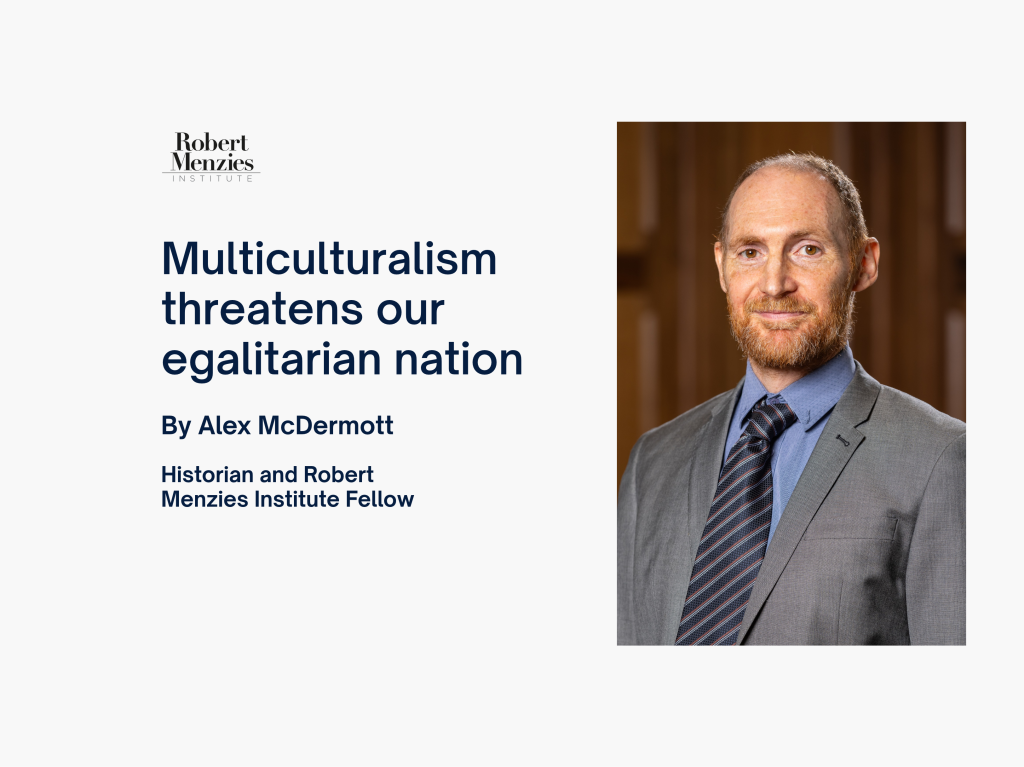
Alex McDermott is a historian and a Robert Menzies Institute Fellow. This article, published in The Australian on 23 October 2026, is based on his contribution to the Institute’s Policy Paper Conditions for a Successful Immigration Policy launched on 27 October 2026.
***
There’s a grotesque irony in Anthony Albanese’s starry-eyed “multiculture is who we are” rhetoric, on display at last week’s address to the Federation of Ethnic Communities’ Councils Australia, just as news was breaking about the latest funding grant to support toxically corrosive social media videos, featuring current Taliban officials labelling Australian soldiers “terrorists”, and describing Australia’s spate of antisemitic attacks as staged hoaxes.
That this occurred under the umbrella of Tony Burke’s Multicultural Media program, designed to “strengthen social cohesion while increasing tolerance and understanding between individuals and groups in Australia”, inadvertently makes clear that this is not a bug but an ineradicable feature of the multiculture system.
The fracturing of Australian citizens into subgroup identities encourages ever deeper divisions. Equating culture – a question of habit, value and practice – with ethnicity, a matter of ancestry, repeats the foundational category error of the White Australia policy itself: the very doctrine it was conceived to expunge.
But the reality, which our confused political class is determined to ignore, is that our national identity – our culture – is not defined by ethnicity. If defined by anything, it is defined by democracy.
Ethnic diversity was a fact of our history long before it became an ideology. The attributes we invoke to describe the national character – the “fair go”, an unpretentious egalitarianism, an easygoing tolerance and a quiet, everyday freedom – are liberal democratic values, localised and nativised into an everyday Australian vernacular.
Historian John Hirst gave the phenomenon its most thorough excavation, calling it Australia’s “democracy of manners”. Its hallmark was treating each other as affably familiar equals, whatever the differences of background, faith or status.
This ethos took root early out of practical necessity. Settlers from hostile Irish, Scots and English backgrounds navigated an alien environment without separate residential enclaves. Mixing was a defining feature from the first arrivals: residentially, occupationally and through intermarriage. Old-world enmities were minimised, sectarian disputes avoided, as people concentrated instead on shared material progress, leisure and participation in a society devoted to “a fair field and no favour”, where status distinctions were fluid and class rigidities minimal.
The striking success of Australian Jews in this early matrix stands as authentic proof that this social creed was never limited to British stock, demonstrating that a multiethnic experiment flourishes when particularised differences remain secondary to a common civic status.
The informality of our democracy of manners developed because Australia forged a democratic culture well before it achieved formal democratic politics. Prosperous and self-confident convict-era workers felt no obligation to show deference to obtain employment. The rich were largely self-made men of obscure origins, sharing the same recreations as labourers.
People elsewhere fought for democracy because, as Hirst put it, “they wanted respect for ordinary people, that they should not be humiliated and scorned by their ‘betters’”. Here, social equality had already been achieved before the 1850s arrival of democratic politics.
Despite this informality, post-Federation Australia did not lack civic liturgies. Curriculum placed civics at the heart of schooling, designed to counteract the tendency to, in the words of one educationalist, “let the social group to which he belongs do his thinking for him”. School texts reminded pupils that “we are born free, but we would not have been born free if it had not been for the struggles and labours of others”, and pledges at the school flagpole continued well into the 1960s.
Our unifying civic code, strange to say, was “civic Britishness”. It’s easy to be dismissive of this heritage, but we should resist that temptation. Far from a narrow racial category, Britishness was a dominantly liberal and civic project – a shared inheritance extending back to Magna Carta that no single group could claim exclusively. With the dissolution of the British Empire and Britain’s turn to Europe in the 1970s, that protective sheath was lost, triggering a collapse of civic consciousness and sudden-onset historical amnesia.
Into this vacuum stepped the ideology of multiculturalism.
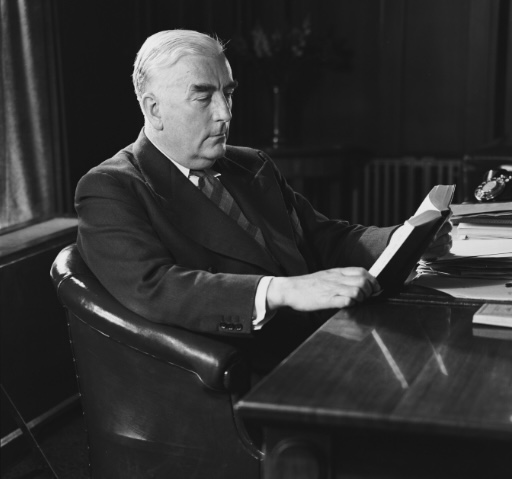
Yet a multiethnic society was already an established fact. Post-war assimilation under Ben Chifley and Robert Menzies achieved this through what political commentator Frank Knopfelmacher termed “benign neglect and steady upward absorption”. “Assimilation” functioned not through state intervention, but by being a shared national aspiration. Migrants established their lives largely unhindered, while integrating through unmatched rates of intermarriage and vibrant associational life. The democracy of manners continued to reign supreme.
This ethos survived into the multicultural era, where its organic tolerance was claimed by policy advocates as the creation of their own project. That informal tolerance – getting along, eschewing airs, ignoring status differences – remains what Australians overwhelmingly approve of in surveys as “multiculturalism”.
The actual operation of multiculturalism as state policy, however, is entirely different. It inevitably sorts individuals into fixed ethnic categories. Strikingly, the same people who by large majorities say they approve of multiculturalism are hostile to this, the policy’s key, definitive signature. It is because of multiculturalism that people are nowadays even hesitant to acknowledge that we have a coherent, perceptible national culture, for fear of sounding “racist”.
The policy’s innate tendency to diminish the core national culture is the yawning vacuum at its heart. The problem with multiculturalism, as Donald Horne observed, is that it “gives us no clue about unity. Instead it takes for granted the existence of a unity that the embrace of diversity is supposed to build upon and be in counterbalance against.”
We can’t assume Australia’s longstanding, multiethnic democracy can survive ideological multiculture indefinitely. The fractures it encourages and exacerbates are all too evident. Multiculturalism, assumed by many to be an inherently benign, aspirational liberal project, is producing increasingly illiberal consequences. It needs to be discarded.
The collapse of the Australian project of common, shared identity, driven in significant part by state-sponsored reification of subgroup identities, means we increasingly look upon each other as not just civic strangers, but enemies. Only by emphatically reasserting our singular, shared and shareable national culture, grounded in the common virtues of our shared democratic inheritance, can we begin to turn this around.
Read Our Paper: Conditions for a Successful Immigration PolicySign up for our monthly newsletter to hear the latest news and receive information about upcoming events.
Sign up for our monthly newsletter to hear the latest news and receive information about upcoming events.