


26 Jun, 2025
2025 Oration and Dinner with Toby Young, Lord Young of Acton
One Soaring Imagination: The Destiny of the English-Speaking Peoples in the Twenty-First Century was delivered by Andrew Roberts, Lord Roberts of Belgravia at the Robert Menzies Institute’s 2026 Annual Oration & Dinner event on the 17 September 2026.
Enjoy the full speech by Lord Roberts below:
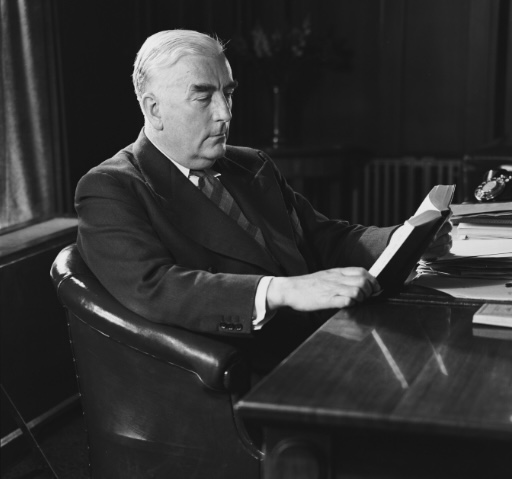
‘In the whole of recorded modern history,’ Sir Robert Menzies said in his eulogy to Winston Churchill from the Crypt of St Paul’s Cathedral in January 1965, speaking about the crisis of 1940, ‘this was, I believe, the one occasion when one man with one soaring imagination, with one fire burning in him, and with one unrivalled capacity for conveying it to others, won a crucial victory not only for the forces (for there were many heroes in those days) but for the very spirit of human freedom.’
There were indeed many heroes during the Second World War, Menzies himself among them, and tonight I would like to explore that cultural tradition of which Churchill, Menzies and so many other of their contemporaries saw themselves as forming a part: namely the English-speaking peoples, or what is nowadays more commonly called the Anglosphere. When their imaginations soared, it was very often towards the concept of a global family of English-speaking nations upon which their thoughts, hopes and dreams alighted. I want to argue tonight that Australia still has a central part to play in that noble aspiration.
This global family, with a common language and literature, and belief in the rule of Law, free speech, democratic institutions, individual liberty, property rights, and a fierce hatred for totalitarianism, would be stronger for being closer, and it would be a beacon for other countries too. Those were the common assumptions of Churchill, Menzies, and many of our forefathers, and it is my business here to argue that, however much it is under threat today from within as well as from without, such unity and common purpose still provides the last, best hope for Civilization.
This month sees the 75th anniversary of a pivotal moment in the history of the English-Speaking peoples, when Australia, New Zealand and the United States signed the ANZUS Treaty, providing the security basis for the Pacific that has been the cornerstone of peace in this part of the world ever since. It was not an alliance in the strictest sense, indeed Menzies himself never argued that it was, but with a few hiccoughs – The West New Guinea Dispute from 1950 to 1962, New Zealand’s nuclear issues in 1985, and East Timor in 1999 – it has served its signatories well.
Ironically enough Winston Churchill, father of the concept of the English-speaking peoples, resented the pact as it excluded Britain, but in this, as in some other things – the pursuance of the Dardanelles Expedition after March 1915 also springs to mind – he was wrong. Australia’s deliberate shift towards America as a Pacific power was the correct strategic stance to take, as one part of the English-speaking peoples, namely Britain, passed on the baton to another, the United States.
‘I would have made nothing if I had not made mistakes,’ Churchill was to tell his wife, which ought to be a solace for the rest of us when we make them. He was wrong to resent the ANZUS Pact, just as a large number of Australians and New Zealanders were wrong to oppose the pact because of the way that it opened up the way for reconciliation with Japan after the utterly despicable and loathsome way that the Japanese had treated our prisoners-of-war between 1941 and 1945. History has shown that reconciliation was the correct course, and today Japan is a model democracy that, like Australia and so many other countries, especially Taiwan, are on the receiving end of aggression and sabre-rattling from National Socialist China. If Japan can now throw off its historically understandable objections to nuclear weapons, China and North Korea would be further deterred.
Beside my desk in my study at home, I have a framed handwritten letter written by Aldous Huxley in 1959 which reads: ‘That men do not learn very much from the lessons of history is the most important of all the lessons that history has to teach us.’ Menzies said much the same thing in a speak at Ditchley House in Oxfordshire in July 1967 when he pointed out, ‘Although we have a great history, we have a sort of genius for forgetting it.’
With the great advantage of 75 years of hindsight since the signing of the ANZUS Treaty in San Francisco, we can now see it in its proper historical light, as an act of great statesmanship. Similarly, we can see the decision by David Lange’s Labour government in 1985 to refuse entry to the USS Buchanan, thus fracturing ANZUS for the virtue-signalling performance politics that it was, which did precisely nothing to make New Zealand or the world safer.
It will fortunately not take 75 years for we historians to spot that Malcolm Turnbull’s recent remarks about the AUKUS Treaty being ‘a colossal mistake’ are also wrong. It is true that Britain’s Labour Government, which still has not been able to set a date to spend a pathetic 3% of GDP on defence, has acknowledged that new submarines and combat aircraft might be delayed, citing fiscal pressure and industrial constraints. Even if they are, however, that does not invalidate the AUKUS Treaty in its entirety.
These pressures and constraints are entirely of the Labour Party’s own making, the result of letting spending on welfare let rip in the traditional socialist manner of buying votes, and Mr Burnham has recently stated, ‘We will do everything to support our national security,’ he said, ‘but it can’t come at the expense of social security.’ What he was effectively saying was that Labour will do everything we can to keep Britain safe, but not if it means cutting benefits, which are presently running at completely unsustainable levels in my country.
Nonetheless, even that appalling insight into Mr Burnham’s priorities does not justify headlines such as that of The Times of London, ‘Britain can’t provide us with nuclear submarines, says Malcolm Turnbull.’ Britain can and will provide the submarines, indeed on 26 June the then Secretary for Defence, Dan Jarvis, said, ‘Today, we commit £64 billion to fund Dreadnought and AUKUS submarines, a new warhead and other crucial nuclear work.’ Only last week the new Defence Secretary, Wes Steeting, said that it was ‘hugely important’ to deliver the submarines. He told your defence secretary Mr Marles that at as far as defence is concerned, ‘the centre of the whole conversation that we’re having are the deepest and strongest bonds of friendship and family.’ The truth is that Britain will honour its AUKUS commitments, even though it is cutting back on other things, including training and military manoeuvres.
Of course you will also be getting the three Virginia-class submarines from the United States under Phase 3 in the early 2030s which will close any potential credibility gap, but Britain is the design authority and industrial cornerstone of the SSN-AUKUS submarine programme. Her shipyards, nuclear reactor supply chain, and engineering workforce underpin Australia’s future sovereign submarine capability, although the entire the Western nuclear shipbuilding ecosystem is operating at the edge of its capacity.
Britain’s industrial base, as I saw recently speaking to British Aerospace technicians at Barrow-in-Furness, is alive, innovative, and determined — but stretched. Across Britain’s universities the research pipeline is world-class, but although Australia has committed approximately A$4.6 billion to the United Kingdom to expand British nuclear-submarine industrial capacity, the British Government is not scaling talent into industrial throughput fast enough.
Britain possesses extraordinary niche capabilities — but they must be integrated, scaled, and sustained for decades, not just funded for headlines. Australia is essentially helping to finance the resurrection of the UK’s nuclear shipbuilding industry so that Australia can eventually build its own submarines. This funding is directed toward reactor manufacturing, shipyard infrastructure, and SSN-AUKUS design work.
You will get your submarines, but they will probably be late because of workforce shortages, supply-chain fragility, capital constraints, and infrastructure and regulatory bottlenecks. Of course this poses a strategic risk for Australia, as Britain becomes the slowest industrial link in the chain. AUKUS is not just a procurement program; it is a generational industrial transformation, and the Burnham Government needs to grasp that. Shipyards, nuclear engineers, metallurgists, regulators, and supply chains cannot be surged by the kind of hopey-changey speeches that our new Prime Minister excels at. They all need money more than positive vibes.
Malcolm Turnbull is wrong; the submarines are coming, but Britain ought to be doing practical things to help speed them up and deliver them on time, as our credibility is at stake. We should institute an AUKUS Passport, for example, which could provide common recognition of skills and qualifications, allowing a skilled Australian to work in a British or American facility, and vice versa. We could also establish common industrial standards across the alliance. These may sound like relatively small initiatives compared with nuclear submarines, but they are precisely the mechanisms that could turn three industrial bases into one. When they are delivered, they will be the most powerful attack submarines in history, a huge increase in the arsenal of the English-speaking peoples, confirming Australia as a Pacific superpower.
So what are the actual values that weapons such as the SSN-AUKUS are going to defend, the values that Churchill and Menzies so cherished in their soaring imaginations? Why does Australia play an important part of the concept of Western Civilisation and everything for which it stands? The answer is that since the Glorious Revolution of 1688 in Britain – from whence Australia, Canada, New Zealand and the British West Indies ultimately derive their underlying constitutional structures and assumptions – and the American Revolution of 1776, from which the United States’ derives hers, the legacy of the English-speaking peoples has been the story of political freedom and limited government.
We believe in representative institutions; no soldier-dictators posing as politicians have ruled over our peoples since the Glorious Revolution. Plenty of soldiers have held high office – one thinks of the Duke of Wellington, Teddy Roosevelt, Winston Churchill and JFK – but none have come to power with the threat of armed men at their back. Yet in Continental Europe in the 20th century, let alone in Africa or Asia, one constantly finds men who have derived their power solely due to naked force.
Of course this is partly due to Britain’s lucky geography, which has meant that she has stayed uninvaded for nine centuries, as we are presently reminded by the British Museum’s exhibition of the Bayeux Tapestry. Since 1789 Britain has developed in an evolutionary way, as a constitutional monarchy. In that same period, France has had five republics, three monarchies and two empires.
Similarly, the English-speaking peoples have been governed by the rule of a Common Law that has evolved through the use of precedent even since Magna Carta, in stark contrast to most European, Eurasian, African and Asian countries. This too has been epicentral to the sense of trust necessary for her economic development.
Religious toleration has proved of inestimable advantage to the English-speaking peoples; there has been prejudice, sadly, but no actual persecution beyond some anti-semitic pogroms in southern Ireland at the turn of the 20th century. We have had no equivalent of Germany’s Kulturkampf or France’s Dreyfus Affair. The result can be seen in the brain drain of Jews from the Third Reich, and its effect on American science, economics and culture. Between 1901 and Hitler coming to power in 1933, Germany won 25 Nobel Prizes in science against America’s five; from 1950 to 2000 Germany won only 16 to the United States’ 67.
Free Speech and freedom of the press were largely the constructs of the English-speaking peoples, buttressed by Law in Britain and the First Amendment in America, and it has done more than any other single factor to counter political corruption. The first time the concept of freedom of the press appeared was in England in the late 17th century; the expression is not found in French for another hundred years.
The free market economic model preferred by at least the conservatives of the English-speaking peoples has ensured that while we only make up 7.5% of the world’s population, they nonetheless produce some 35% of global GDP. By allowing the market to unleash human potential far better than any other economic model, and with societies that encourage the open interplay of ideas, the English-speaking peoples have been in the very forefront of every single technological innovation since the Industrial Revolution of the 1760s, most recently those of the automotive, aeronautics, computer technology, finance, biotech, IT and the Internet, and now in AI.
Now, the English-speaking peoples cannot claim to have invented all the ideas that have come together to make them great. The Romans invented Law; the Greeks came up with Democracy; Protestantism came from Germany, and modern Capitalism stems from 17th century Holland. Yet the English-speaking peoples did brilliantly adapt those ideas to the values of the 1688 and 1776 revolutions.
Although England only covers 1.3% of the world’s land surface, the English tongue is comprehensible to 25% of the global population. Presently there are almost as many Chinese learning it as their second language as there are people who speak it as their first language. This will permit, for the first time in the history of Mankind, a world conversation to be held, and the global lingua franca, ironically enough, will be English. French attempts to defend and protect their tongue against the English onslaught by recourse to laws like the Loi Toibon have uniformly ended in farce and failure. They’re presently trying it once again: good luck with abolishing ‘le weekend’, ‘le Black Friday’ and ‘la sex-symbol’.
Of course, all this Civilisation, Law, pre-eminent Language and political Liberty is utterly worthless unless one is prepared to fight to defend it. In the last eleven decades alone there have been four great assaults on the primacy of the English-speaking peoples, and with the present threat of an axis of China, Russia, Iran and North Korea, a fifth is fast developing. The first came from proto-Fascist Wilhelmine Germany; the second from Nazi aggression; the third from Soviet Communism, and the fourth from Islamicist fundamentalism.
The witness of history is testament to the fact that it is not wealth but willpower that determines who wins. The Romans were richer than the Huns, the Ottoman Turks than the Mongols, the Romanovs than the revolutionaries, Weimar than the Nazis. Yet all ultimately lost to their poorer but more committed foes. So being rich is not enough.
Furthermore, greatness tends to lead to attacks. Envy, that most barren of all vices, is also one of the most common: to hate the top dog world power is part of the human condition. ‘I never spend five minutes in inquiring if we are unpopular,’ the Viceroy of India, Lord Curzon, wrote in 1900. ‘The answer is written in red ink on the map of the globe. No, I would count everywhere on the individual hostility of all the Great Powers,but would endeavour to arrange things that they were not united against me. And the first condition of success in such a policy is, in my opinion, to be as strong in small things as in big.’
Yet that does not mean that a great power should pick unnecessary fights, and especially not with its allies. President Trump’s needlessly provocative stances towards Canada over her sovereignty, Denmark over Greenland, threatening Spain with a trade and travel ban, and most recently his disgraceful remark about reviewing the United States’ position over the Falkland Islands and Irish reunification show that he has an approach to foreign policy that is so callously bullying and transactional that it flies in the face of any sentiments of the kind that Churchill and Menzies – and for that matter also FDR, Truman, Eisenhower, Nixon and Reagan – had towards the concept of the Free World versus Totalitarianism.
Australia seem to be one pf the only close allies of America that the modern Emperor Nero has not slapped in the face. Yet. He has two more years in office, so you’re not out of the woods. Donald Trump governs by perpetual pique, and it has led him into some appalling blunders, such as telling the Iranian opposition that America was ‘locked and loaded’ in their support when it was neither, and starting a war in the Straits of Hormuz that the US Navy had not assured him he could keep open.
The attacks on the English-speaking peoples usually come from a clear blue sky, and see early defeats. Black Week in the Boer War, the Schlieffen Plan in 1914, the invasion of Poland in 1939, the attack on Pearl Harbor, the Berlin Blockade of 1948 and the building of the Wall there in 1961, North Korea’s invasion of the South, the Suez Crisis, the invasion of the Falklands, the Gulf War and 9/11: almost all were surprise attacks. ‘The most surprising thing about surprise attacks,’ Paul Wolfowitz has said, ‘is that we’re still surprised by them.’ Although Israel is not part of the Anglosphere, the monstrous atrocities perpetrated by Hamas on 7 October 2023 were certainly part of the same phenomenon.
Occasionally, pre-emptive action has been required by the English-speaking peoples, as when Nelson attacked the Danish fleet at Copenhagen in 1801, Churchill attacked the Dardanelles Outer Forts without a declaration of war in November 1914, and Churchill sinking our ally France’s fleet at Oran in July 1940. One offensive action that President Trump did get right was his surprise attack on Iran’s nuclear facilities in June 2025.
Great Power status has often been lost because of small, insignificant nations: tiny Serbia versus giant Austria-Hungary in 1914, North Vietnam humiliating France at Dien Bien Phu in 1954, two years later the British Empire was humbled by paltry Egypt at Suez, just as the Afghans drew attention to Russian weakness in Afghanistan in the decade after 1979. The moral is very that of Lord Curzon: ‘Be as strong in small things as in big.’
Like every other Western nation, Australia should be highly concerned about the isolationism of the modern America First movement. If the English-speaking peoples had been more united after the First World War, if the USA had abjured isolationism, joined the League of Nations and taken part – or even the lead – in vigorous collective action against Nazi Germany from 1933 onwards, perhaps the second great global conflagration of that century might also have been avoided. As it was, much of Europe fell prey to Fascism, and those parts that escaped it fell prey to appeasement and neutrality. ‘It is the English-speaking nations who, almost alone, keep alight the torch of Freedom,’ said Winston Churchill in 1938. ‘These things are a powerful incentive to collaboration. With nations, as with individuals, if you care deeply for the same things, and these things are threatened, it is natural to work together to preserve them.’ Mr Trump should not just return Churchill’s bust to the Oval Office; he should heed his words.
I think Clive Bell’s definition of Civilization in 1928 is as good as any, taken from his book Civilization, where he defined it as: ‘A taste for truth and beauty, tolerance, intellectual honesty, fastidiousness, a sense of humour, good manners, curiosity, a dislike of vulgarity, brutality and over-emphasis, freedom from superstition and prudery, a fearless acceptance of the good things of life, a desire for complete self-expression and a liberal education, a contempt for utilitarianism and philistinism’.
Judged by Bell’s definition, and for all its undoubted high civilisation in the distant days of Ming porcelain and the invention of printing, today’s China is very far from a civilized country, and looks set to move yet further away from the kind of civilisation adumbrated by Bell.
Should China ever achieve hegemony over our planet – something that is certainly not inconceivable on present trends, and might well happen in our children’s lifetimes, if not our own – then the prospect for the survival of the legacy of the English-speaking peoples, of all those liberal values of which I have been speaking, would be terrifyingly bleak. All that would stretch forward in the life of this planet would be a new Dark Age, in which the global whip-hand belonged to one of the most unpleasant totalitarian regimes on the planet, one whose leaders are activated by instincts diametrically opposed to the generous, open, enlightened ones I have been describing.
For the post-revolutionary clique that controls China does not believe in any of those values that made the English-speaking peoples great. They despise representative institutions, waive the rule of law, persecute religious faiths and crush free speech. Their treatment of Australia and Canada has been monstrous over the past two decades, bullying and aggressive.
There is absolutely nothing about human affairs that suggests that democracy must triumph over dictatorship, Civilization over barbarism, good over evil. As John Stuart Mill warned in On Liberty: ‘It is a piece of idle sentimentality that truth, merely as truth, has any inherent power denied to error, of prevailing against the dungeon and the stake.’ Modern China is the country of the dungeon – with its vast hidden gulag complex of political prisons – and of the stake, with its world record in the number of people it executes, as Amnesty International stated in a recent report, ‘extensively, arbitrarily and frequently as a result of political interference’.
Great civilisations of the past – one thinks of the Romans crushed by Attila, the Aztecs and Incas falling before the Conquistadores, the Spanish Moors expelled by Ferdinand and Isabella – have succumbed to the energy and might of their enemies, for multifarious reasons adumbrated by historians such as Edward Gibbon and William Prescott. So there is nothing inevitable in the future triumph either of Democracy or the English-speaking peoples. Putin is already fighting a hybrid greyzone war against NATO, however much we might try to downplay it, and underfunding our military only encourages him.
The world will be a very different, and far more uncomfortable place, for the English-speaking peoples, should China become the global top dog power, displacing the United States. Historians can debate exactly when, sometime between Pearl Harbour and D-Day, the Britain Commonwealth handed the imperial baton over to the United States –but whenever it happened at least the successor power spoke our language, shared our laws, traditions and values, and were twice our war-tested allies.
If China does eclipse the United States in our lifetimes, we may come to regard Richard Nixon and Henry Kissinger’s opening up of China in 1973 not as a brilliant way of outmanoeuvring the USSR in the Cold War and bringing a stable force into the world economy for the first time since the early 1930s, but instead the opening of a Pandora’s Box full of terrible new threats to face Mankind. People already accept that allowing China into the World Trade Organization under such favourable terms in 2001 was a catastrophic error for Western economies.
The 20th century was called ‘the American Century’ with some reason, but with China’s ceaseless sabre-rattling against democratic Taiwan, her boot on the neck of Tibet, threats against Vietnam and the Philippines in the South China Sea, and her enabler relationship with North Korea over its nuclear weapons programme, China’s international behaviour hardly augurs well for a peaceful Chinese Century.
China is now the only empire left in the world, in the sense of a multicultural entity held together by force, and soon the most powerful nation in the world might not be a liberal democracy, but instead an authoritarian, totalitarian Marxist-Leninist dictatorship. This has already called into question whether Western-style liberty really is the best form of government. Historically, rich middle classes have demanded a say in their own government, but in the case of China that has not happened.
Here in Australia, you are almost on the front line of this terrifying new existential threat against the English-speaking peoples. Of course there are grounds for hope that the Chinese threat might implode before my dystopian vision becomes a reality, especially demographically if China gets old before it gets strong, but it doubled its military expenditure last year and is building aircraft carriers. A purely offensive not defensive weapon.
Civilisation is, as Evelyn Waugh reminded us when writing of Rudyard Kipling, ‘the work of centuries’ which is ‘laboriously achieved’ but only ‘precariously defended’. When the Chinese are in the global driving seat, the world will look back in loving nostalgia to the ‘boyish tyranny’, and the once-lustrous but by then utterly moribund legacy of the English-speaking peoples. The Americans have finally woken up to the long-term threat posed by China, in a way the Obama and Biden Administrations never really did, but their prescription – of weakening the English-speaking peoples by unnecessary infighting – is a weird prescription for what to do about it.
Speaking at Ditchley House in Oxfordshire on the future of the English-speaking peoples in July 1967, Sir Robert Menzies said that ‘This is a human journey, great psychological adjustments must be made and a new imagination brought into play.’ The psychological adjustment that Washington needs to make is to quit bullying allies and instead start to bring about an imaginative new union of the English-speaking peoples and their allies – countries like Poland and the Baltic States, Japan, South Korea, Israel, Ukraine, the West Indies, India, the Philippines, Scandinavia – into a coalition of democracies, before China starts buying up and suborning them.
Robert Menzies wrote a poem in The Melbourne University Magazine in May 1914. It is a beautiful work full of optimism and hope:
‘So we march ever, our gaze still before us,
Catching a glimpse of the stars, it may be;
Dreaming the dream of a world that is better,
Seeing the vision of men that are free,
Yearning to find the great day of our triumph,
Lit with the glory of reaching our goal!
This is the prayer, and the life, and the hope of us.
This is our blazing, unquenchable Soul!’
Menzies could not have known when he wrote it that it was only a matter of days before the Archduke Franz Ferdinand was assassinated in Sarajevo and the world collapsed into slaughter and gore as Kaiser Wilhelm II and the Central Powers tried to grab hegemony in Europe. One hundred and twelve years later, knowing what we know, and with all the lessons of history before us, are we now too cynical even to try to ‘dream of a world that is better’?
In many ways, of course, our modern world is far better, especially better off in absolute material terms and average longevity, and much if it because of the legacy of the English-speaking peoples. Yet are we morally better than our forefathers? Sticking to their highest principles will see us through our present discontents, and we should not give too much mind to those modern philosophers, deconstructionists, nihilists and socialists, Jacques Derrida and post-structuralist intellectuals, who try to argue that there is some kind of moral equivalence between us and our enemies. There simply isn’t.
On one area we are indeed morally superior to our forefathers, as we no longer believe in a hierarchy of races, in deference to the Darwinian scientific assumptions of their day. Perhaps the most inspiring sentence written in English comes from the Declaration of Independence, although it has been put to uses that the slaveowner Thomas Jefferson could never have imagined. He wanted to use them as a way to inspire Americans to rebel against the British when he wrote, ‘We hold these truths to be self-evident, that all men are created equal, that they are endowed by their Creator with certain unalienable Rights, that among these are Life, Liberty and the pursuit of Happiness.’
They certainly did inspire the American revolutionaries of 1776, but later they went on to inspire the Union states to force the Confederate rebels to accept the abolition of slavery, and a century later they inspired the civil rights movement, and all around the world they have been used to inspire oppressed people against their totalitarian masters. They are a noble part of the legacy of the English-speaking peoples. Our enemies attempt to besmirch us because racism was endemic in our countries for generations, forgetting that so were the weapons and tools that eventually defeated racism intellectually, legally and finally culturally.
Inherent in Magna Carta is that every citizen is a freeman subject to law, and eventually that overcame the neo-Darwinism that saw race as hierarchical. Today if you want to see immobile institutionalized hierarchies in societies, you no longer look to the English-speaking peoples, but instead to the Indian caste system, the treatment of women in Islam, the Chinese Communist Party’s oppression of Uighurs and Falun Gong, the power and wealth of Putin’s nomenklatura and oligarchs. Compared to all of those, comprising much the largest proportion of mankind, the English-speaking peoples are models of social mobility, toleration and equality before the law. But for some reason the deconstructionists of the Left prefer instead to continue flogging the dead horse of post-colonialist guilt.
We should shrug off their often hypocritical criticisms, and concentrate instead on the idealism of our common heroes, of men like Menzies and Churchill, and remind ourselves of that magnificent invocation:
‘This is the prayer, and the life, and the hope of us.
This is our blazing, unquenchable Soul!’
Thank you to the Lord Roberts for delivering this thrilling oration at our 2026 Annual Oration & Dinner.
You can see more videos from the event here.
Sign up for our monthly newsletter to hear the latest news and receive information about upcoming events.
Sign up for our monthly newsletter to hear the latest news and receive information about upcoming events.

