30 Jun, 2025
2025 Policy Dialogue: Conditions for a Successful Democracy
On 22 July 2026, the Robert Menzies Institute hosted its 4th Policy Dialogue on the topic ‘Conditions for a Successful Immigration Policy’. The event invited 40 policy makers, public intellectuals and academics from across the political aisle in Australia to discuss issues relating to Australia’s immigration policy.
While the event was held under Chatham House Rules (where nothing said can be attributed to a speaker) – the Institute’s historian and Research Manager, Dr Zac Gorman, shares his reflections on the discussions from the day.
The Institute will be publishing an Occasional Paper based on the discussions from the day.
***
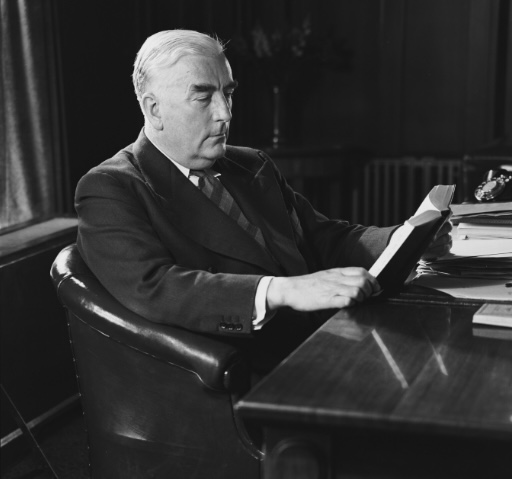
As a leader who on three separate occasions called an election less than two years into a parliamentary term, Sir Robert Menzies understood that timing is everything.
So, when the Institute’s annual Policy Dialogue exploring the ‘Condition’s for Australia’s Successful Immigration Program’, happened to coincide with Pauline Hanson’s recent suggestion that Australia return to a ‘monoculture’, we knew that we were tapping into an issue that was weighing heavily on the national conscience.
Menzies would likely have disagreed with the idea that Australia was ever truly ‘monocultural’, declaring that, even in our most seemingly homogenous past, our nation drew: ‘its strength and resilience from its mixture of English, Irish, Scots, Welsh, Cornish and, going back further, the Celt, the Angle, the Saxon, the Norman’.
Yet, despite deliberately convening a room of expert historians, journalists, policymakers and thought leaders from across the political spectrum, and giving them the cover of Chatham House Rule anonymity to really go at it, there was a remarkable degree of consensus suggesting that Hanson was right.
Not in her proposed solution to the frightful breakdown in Australia’s social cohesion, but in identifying that the debate over immigration policy is not really about economics in isolation, as important as prosperity is to human flourishing and civic wellbeing. It’s about culture, how to balance pluralism with unity and purpose, and ultimately what sort of nation we really want to be. There was even some agreement from several proponents of multiculturalism that the term, if not its content, may well have passed its use-by date.
Being an exercise in applied history, the dialogue really benefitted from its appreciation that we are by no means the first generation to grapple with these issues. As an immigrant nation, they have been central to Australia’s political debates and the processes shaping our emergent identity since 1788. Equally, they have been questions that have always become most pressing during times of economic hardship.
One wonders whether the White Australia Policy would ever have been so deeply embedded into the ‘Australian settlement’ were it not for the depression of the 1890s heightening anxiety that the ‘working man’s paradise’ which had experienced the highest real wages and living standards in the world as of the mid-19th century, might be lost. Perhaps we hold the same anxiety about the Lucky Country’s fortune finally running out, and the dream of homeownership and family formation fading from view.
On the other side of the coin, one is left contemplating whether the slow and steady dismantling of White Australia from the 1940s through the 1970s would ever have gone as smoothly were it not for the optimism engendered by the economic and baby booms, which went hand in hand with the immigration boom during the long period of Menzies era prosperity. Does fixing immigration policy in 2026 actually mean fixing productivity and turning around the birthrate, so we are not so over-reliant on migrants? If so, where do we even start? The interconnection of immigration with just about every other challenge the country faces was a big takeaway.
It was identified that at a time of massive budgetary pressures, immigration provides an immediate sugar hit to the four-year forward estimates, and subsidises shrinking public investment in universities. But as a solution to an aging population, it is at best short term. Because migrants themselves will either settle, age, and likely draw on the safety net, or remain temporary and less invested in the nation they are expected to help build.
Perhaps the biggest questions raised were those that applied as much to existing citizens as to new ones. What is the civic compact that we are really being asked to commit to? How can a nation that seems so unsure of itself and ashamed of its past, really expect immigrants to be proud and positive? How can what John Hirst dubbed our ‘democracy of manners’ survive the decline of civic participation, rise of social media, and diaspora communities who continue to live digitally in the old country? Have we lost sight of the Menzian lesson that ‘a good democrat is one with a silent acceptance of his duty while a bad democrat is one with a noisy insistence upon his rights’?
Finally, what is it that ties a nation together? We know that there is no going back to ‘British race patriotism’ of the early 20th century, but is a shared commitment to democratic values really enough, particularly when war may very well loom on the horizon?
I’m going to take a while to process and ponder all of this, before diving into the daunting task of distilling the day’s innumerable lessons into an occasional paper. But I do suspect that while greater investments in civics education and migrant integration are essential, on their own they will not prove enough to counter the centrifugal forces that currently plague Australia and have done so much to fuel the fire surrounding the immigration issue.
There is something to be said for sentiment, an emotive and almost mystical commitment to the ‘imagined community’ of the nation, that is no less real because it is difficult to articulate or define. Nor less vital because some have tried to corrupt that healthy and innate impulse for belonging and contribution into exclusion and hate.
When I say that I am Australian, I’m not referring to a passport or even voting rights. I’m saying that I’m an integral part of a story of a people and a place. One that’s bigger than me, started before I was born, and will hopefully keep progressing long after I am gone.
Sign up for our monthly newsletter to hear the latest news and receive information about upcoming events.
Sign up for our monthly newsletter to hear the latest news and receive information about upcoming events.