26 Feb, 2026
History Is Not a Therapy Session: What 250 Conversations Reveal About Australia’s Past, Power and Democracy
This article was first published in The Australian, 26 February, 2026, by Zachary Gorman
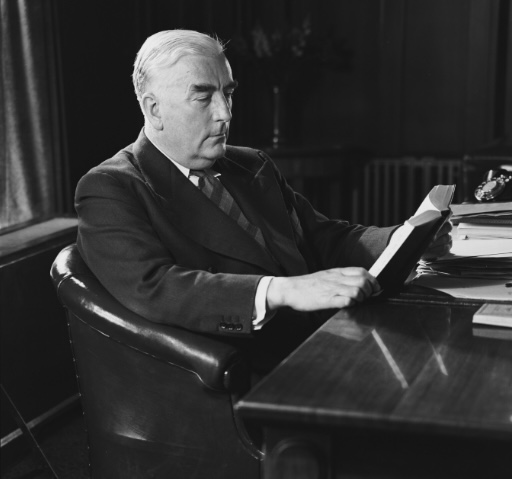
In 2017, while visiting India as a part of a parliamentary delegation, Pauline Hanson identified Robert Menzies as her favourite Australian prime minister.
Unfortunately, One Nation’s policy of conscripting doctors to serve in the regions before they would be allowed to practise under Medicare in the cities epitomises how a party that claims to be the true champion of conservatism stands removed from many quintessential conservative values.
The policy itself is a non-starter because it directly contradicts the Constitution’s prohibition on civil conscription in the medical field.
What is striking is not merely One Nation’s apparent ignorance of this fact but also its historical ignorance in not knowing that the clause itself was inserted by Menzies during his landmark battles against socialism during the 1940s.
One Nation’s embrace of doctor conscription suggests that, in this instance, it may well have stood on the side of the socialists. Its position places its political heritage nearer to historic Labor figures such as Ben Chifley and Arthur Calwell than to Liberal Party founder, Menzies, Hanson’s avowed favourite. This is simply because it does not recognise the fundamental Menzian principle of limiting the power of the state in regard to the individual.
During World War II, state power had been greatly increased under the High Court’s wide interpretation of the defence power.
From 1944 to 1948, the Curtin and Chifley Labor governments sought to make wartime controls permanent through a series of five constitutional referendums aimed at enacting the “socialist objective” that had long stood at the apex of the Labor Party’s platform. Menzies forged his political identity and supporter base through his opposition to this socialist agenda, one that succeeded in Clement Attlee’s Britain where it was not subject to the same constitutional roadblocks as in Australia. Indeed, the “14 powers” referendum of 1944 provided Menzies with the essential political momentum to form the Liberal Party.
Fittingly, the party would first attain power in 1949 after the High Court overturned Chifley’s attempt to nationalise the banks, which he pushed ahead with even without constitutional change.
Only one of Labor’s five referendums succeeded, the Social Services referendum of 1946. And it is to this referendum that we can thank the Constitution’s prohibition on civil conscription in the medical field.
Menzies agreed to a bipartisan position on this referendum on the condition that the constitutional amendment explicitly prevent doctors being forced to work for a government-only system akin to Britain’s National Health Service. (It is worth noting that the referendum eventually enabled Menzies’s landmark reforms in the university sector and healthcare.)
Menzies was insistent that there needed to be private competition in the medical field, and that the personal element of the doctor-patient relationship be preserved against the cold number crunching of a medical bureaucracy. To this day we have him to thank for a healthcare system that strikes a successful middle ground between the British and American extremes, as well as for the enduring Pharmaceutical Benefits Scheme, which subsidises the cost of prescription medicines so Australians can access necessary drugs at affordable prices.
This isn’t to say that the problem identified by One Nation of lack of services in the regions is not real. Decentralisation and increased services for the regions have long been goals of the centre right in a nation that has historically been one of the most urbanised in the world.
Numerous schemes have been tried through the years to achieve this goal.
That such efforts have generally failed highlights how difficult it is to coerce people into making the choices you wish them to make. Carrots rather than sticks are what encourage behaviour. But a policy that treats working in the regions as a form of punishment does the exact opposite of this.
Life in the regions has many things going for it: freedom, affordability, a sense of community and proximity to nature. The main drawback is often the lack of employment opportunities, which doctors responding to a shortage would not face.
Even if it were not for the constitutional prohibition, the coercion of doctors would still be a Pandora’s box that no true conservative should wish to open.
There are enough progressives out there who want to force their views on issues such as abortion and gender reassignment on others without One Nation setting the precedent that doctors can be told what to do in matters of lifestyle or conscience.
Freedom has been the historic catchcry of the Australian centre right since even before the birth of the modern Liberal Party, and conservative voters should be wary of abandoning it on the grounds that people are not exercising their freedom in the way they would like. As prime minister George Reid put it in 1905 after Labor first inserted the “socialist objective” into its platform: “The moment man is driven, even to do the best action in the world, by the force of the law, by compulsion, the merit of charity, the merit of religion, the merit of humanity is destroyed.”
Sign up for our monthly newsletter to hear the latest news and receive information about upcoming events.
Sign up for our monthly newsletter to hear the latest news and receive information about upcoming events.