
26 Jan, 2026
Democracy is a living spirit, and ours needs tending
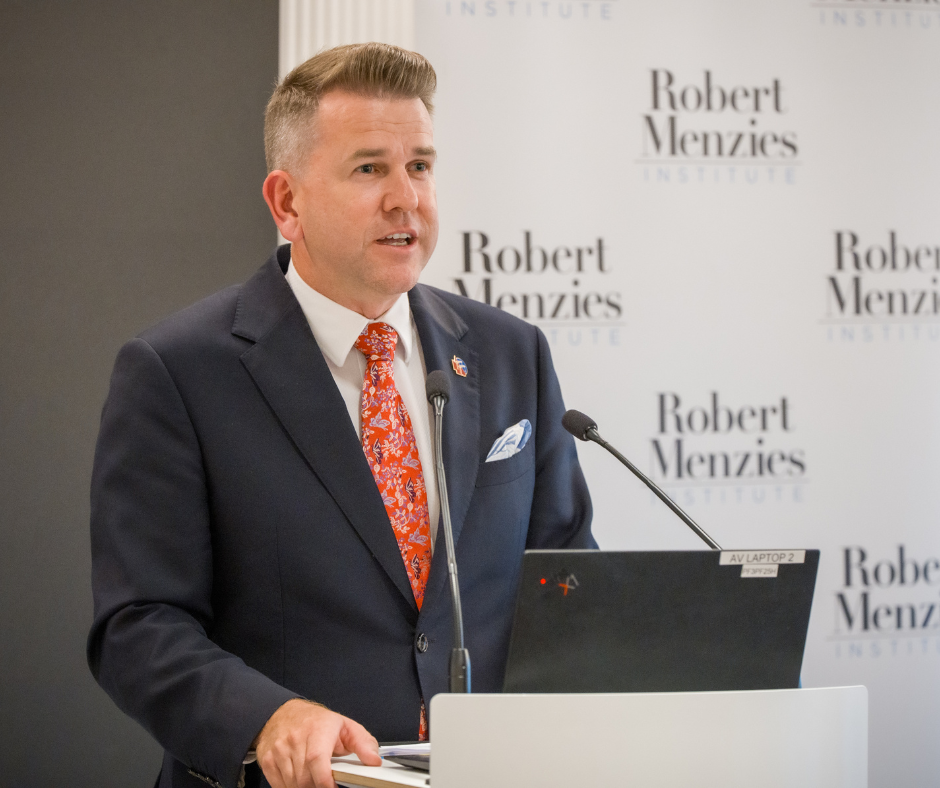
On 3 February 2026, the Deputy Premier of Queensland Jarrod Bleijie launched our book The Menzies Legacy in Brisbane with a landmark speech on the liberal approach to housing and home ownership.
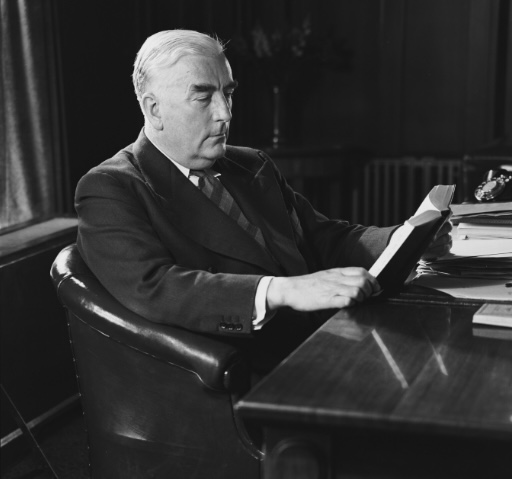
The Menzies Legacy is the final book in a 4-volume series on the life and times of Robert Menzies, Australia’s longest serving Prime Minister. The Menzies Legacy focusses on the last years of his prime ministership and his legacy beyond.
Among Menzies’s many achievements was a significant rise in home ownership, rising from 53% when he became Prime Minister in 1949 to 70% when he retired in 1966.
Following is the text of Jarrod Bleijie’s speech:
“Good evening friends.
Can I please begin by thanking our distinguished hosts from the Robert Menzies Institute, but particularly Georgina Downer who time and time again has demonstrated her commitment to preserving and celebrating Australian history through her work at RMI.
I must say as a Queenslander I am sorry to hear that RMI remains based in the Democratic People’s Republic of Melbourne, but with any luck, in November this year, Victorians may have the good sense to elect a Liberal-National Government and dispose of a deeply unpleasant and underserving Labor Government.
Can I also acknowledge Dr Zac Gorman who has edited, and poured his life and soul into four hearty tomes, The Menzies Legacy being the final entry of this quartet.
The legacy of Sir Robert Menzies and that of his second and famously lengthy government from 1949 until his retirement in 1966 is one which still polarises historians, academics and of course, politicians more than three quarters of a century after he and the Liberal-Country Coalition ended the Prime Ministership of Ben Chifley and eight years of Labor reign.
The mid-20th century in Australian politics not only marked Menzies’ dominance over the Federal Parliament, but over a Labor Party beset by civil war over communism and unable to mobilise and form a credible alternative government for decades.
This book explicates the many facets of political life for Menzies and his contemporaries and chronologises and defines key moments throughout his reign that allow the reader the ability to understand the fullness of his character, motivations, and the cementation of his titanic status in the hearts and minds of Liberals around the country.
Donald Horne, as probably the most pertinent and enduring critics of Menzies, sets out in his infamous The Lucky Country his thesis that under Menzies, “Australia is a lucky country run mainly by second-rate people who share in its luck,” and that his “great talent was to preside over events and look as if he knew what they were about.”
Horne, who as a writer for The Daily Telegraph had been a staunch anti-communist before his transition into a progressive academic, dissected the Menzies Government, giving its leader credit primarily for its longevity, rather than any specific policy achievements, be they domestic or international.
Menzies, as Horne saw it, was able to succeed primarily as a result of the infighting within, and subsequent split of the Australian Labor Party for whom he described as having a “schismatic character.”
The successful campaign of Labor leader Doc Evatt to defeat Menzies referendum to ban the Communist Party of Australia was perhaps the last major demonstration of Labor Party unity for a generation and the single major political achievement of Evatt in his leadership.
What followed was years of infighting, culminating in the various splits from the ALP and the formation of a Catholic, socially democratic and anti-communist political movement in the Democratic Labor Party who Manning Clark suggested that in directing their preferences to the Liberals, kept Labor from government for two decades.
This simplistic and partisan view of Menzies and his government is contested in this work, one which brings together many of Australia’s great historians and concludes an epic series on the life and legacy of the Liberal Party’s founder.
As is elucidated among these pages, it is clear that the assessments of Horne and the conga line of left-wing academics which followed him unfairly characterise a man, and a Government that achieved so much, and which oversaw the transformation of Australian society in the post-war era.
One such transformation was the recognition that an improvement in Australian’s level of homeownership would be catalytic and symptomatic of the nation’s betterment.
David Furse-Roberts explores this transformation in great detail in his astute chapter titled Homes Material, Homes Human and Homes Spiritual: The Menzies Government And Housing Policy.
Furse-Roberts examines the manner in which Menzies not only used the prioritisation of the development of new housing to guarantee the prosperity of a generation of Australians, but also examines how it represented the drawing of political battle lines against a Labor Party determined to restrict the ownership of capital to the ‘collective’, the opposition to which became a central tenet of the Liberal Party’s belief system with instincts towards individualism.
Private home ownership represents the ultimate fightback against state socialism, empowering individuals to collect capital and ultimately own their own share in the promise of Australia.
Revolutionary reforms such as letting the States sell their public housing stock, industrial law reforms and incentivising the conversion of rural land on the outskirts of Australia’s capital cities into new housing developments delivered tens of thousands of new homes.
Menzies also appointed Australia’s first Housing Minister, making clear the single importance to the government’s agenda – the issue of delivering more housing for Australians.
The view of Menzies and his government was that homeownership went hand in hand with Liberal values, including that of the importance of family as the single most influential and consequential institution within society.
Homeownership afforded Australians the opportunity to seek their own destiny separate from the state, and allowed them to govern themselves within their own household.
As Furse-Roberts discusses, the rate of homeownership jumped from 53 per cent in 1947 under the Chifley Government, to approximately 71 per cent in 1966 when Menzies left office, with the total stock of housing in Australia increasing from 1.92 million to over four million.
It is in the same tradition that the Crisafulli LNP Government have sought to reprioritise housing for Queenslanders since we came to government just over a year ago.
Nothing has motivated the Government more than ensuring more Queenslanders can get into their own home sooner.
The promise of homeownership is the cornerstone of what has made life in Australia and Queensland so desirable for decades, but under Labor, many Queenslanders felt they would never have the capital to realise that promise.
Our LNP Government will not stand for it.
We believe firmly in the power of the individual, and we believe in empowering individuals to achieve a destiny that they see fit for themselves.
Homeownership is a core tenet of this belief, and the reality is that the Labor Party would rather see future generations of Queenslanders relegated to renting for life, than seeing them aspire to buy their own stake in the best State in the country.
Programs like the landmark $2 billion Residential Activation Fund are supporting local councils and private landowners with the construction of essential trunk infrastructure to unlock more than 98,000 new homes over the next three years across every part of the State, with 50% of the fund being spent in rural and regional Queensland.
This means that Queenslanders in our capital city, our bustling regional centres, and our rural towns can aspire again to own a home where they want to live.
It is in the Menzian Tradition that the Crisafulli Government forges a way forward to allow more Queenslanders to become homeowners and buy their share in Australia’s future.
Can I again congratulate the Robert Menzies Institute, Dr Zac Gorman, and each of the authors who contributed not only to The Menzies Legacy, but also to the preceding three texts which have cemented themselves as definitive works of Australian history and its longest serving leader.”
Sign up for our monthly newsletter to hear the latest news and receive information about upcoming events.
Sign up for our monthly newsletter to hear the latest news and receive information about upcoming events.